CGN Market Report: Stocks Hold Record Tone as Oil Eases and AI Strength Carries Risk Appetite
Investors are balancing lower crude, Iran diplomacy, tariff uncertainty and continued enthusiasm for AI-linked growth.
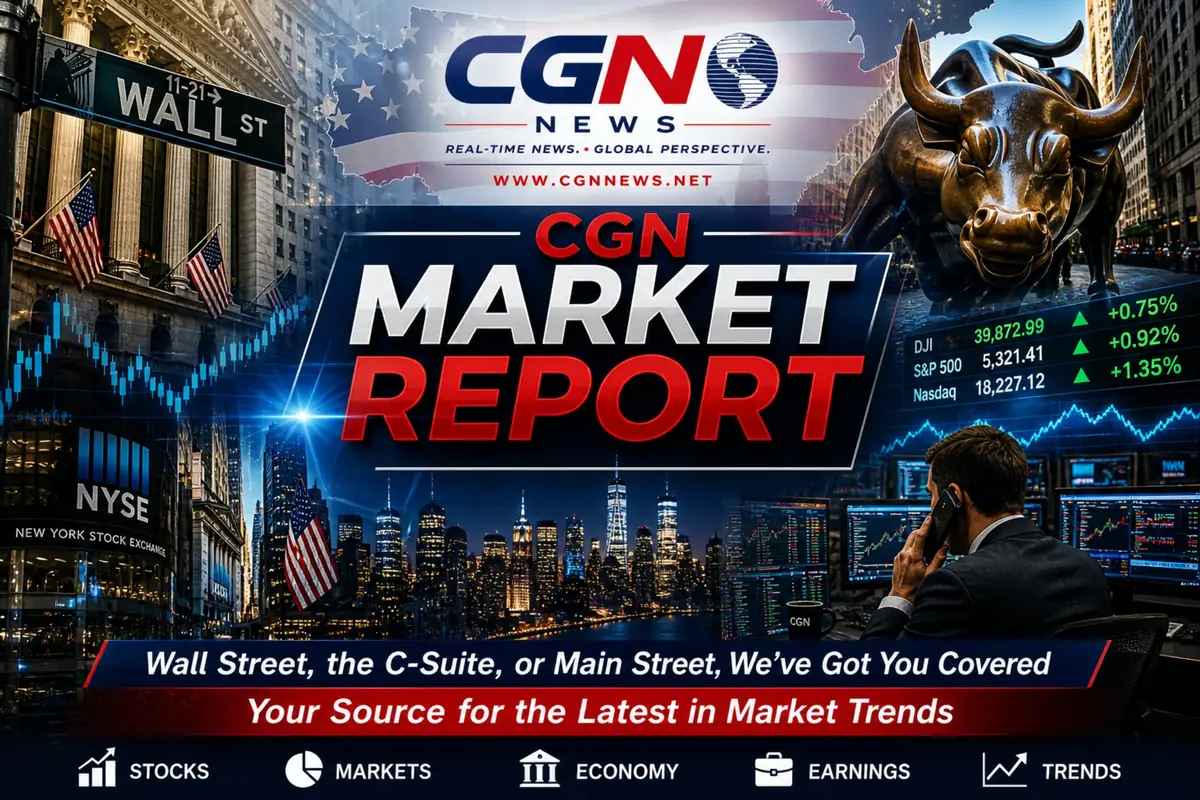
NEW YORK | Stocks closed the week with investors still willing to buy risk, helped by optimism around a U.S.-Iran truce extension, easing crude prices and persistent enthusiasm for artificial intelligence-linked earnings and capital spending.
Reuters reported that Wall Street ended higher as crude prices eased on the possibility of a U.S.-Iran truce extension. The market read the diplomatic opening as a reason to reduce some energy-risk premium, even while traders kept one eye on inflation and the Federal Reserve’s next steps.
The rally has not been one clean trade. AI-linked technology remains the strongest magnet for capital, but the broader market is also reacting to oil, tariffs, rate expectations and legal risk. When several forces point in the same direction for even a day, indexes can make records look calm. Under the surface, the market is still sorting winners and losers.
Lower crude prices can help equities because they relieve pressure on transportation, manufacturing, consumer spending and inflation expectations. The effect is not instant, and it can be uneven. Airlines, freight companies and retailers may welcome lower fuel pressure, while energy producers and service firms watch margins and investment plans.
The Fed angle remains central. Investors want enough economic strength to support earnings, but not so much inflation pressure that policymakers move toward higher rates. The market’s best-case reading is narrow: calmer oil, steady consumption, manageable inflation and enough AI demand to keep capital spending flowing.
That is why the Iran-Hormuz story has become a market story. A strait can sit thousands of miles from Wall Street and still influence the discount rate investors apply to everything from retail margins to industrial supply chains. The market does not need a perfect peace deal to rally. It needs enough probability of stability to reprice the worst case.
AI remains the other anchor. Investors continue to reward companies tied to chips, cloud infrastructure, data centers, power demand, networking and automation. The trade has broadened and narrowed at different points, but the core belief has not disappeared: artificial intelligence investment is still one of the largest corporate spending stories in the market.
There are risks inside that strength. Concentrated leadership can leave the market vulnerable if one large technology name disappoints or if investors question the timing of returns on AI infrastructure. Expensive stocks can stay expensive longer than skeptics expect, but valuation becomes less forgiving when rates rise or guidance softens.
Tariff refunds and trade uncertainty add another layer. If importers receive money back, that can help balance sheets, pricing decisions and consumer-facing companies. If appeals delay the process, the benefit becomes less immediate. Markets generally dislike uncertainty more than bad news that can be modeled.
For investors, the week’s lesson is that geopolitics, courts and earnings are not separate boxes. A shipping agreement can affect oil. A court order can affect retail pricing. A rocket explosion can affect satellite timelines. A soccer final can move sports-media attention. Markets are the place where those connections are priced before they are fully understood.
The record-run narrative should not obscure defensive questions. Cash yields remain relevant. Bonds still compete with equities when yields are attractive. Oil can reverse. A diplomatic headline can fade. Investors who chase every record close without checking the source of the move may find themselves buying yesterday’s relief.
The immediate development sits inside a longer chain of decisions, market reactions and institutional limits. Officials can announce movement quickly, but the practical effect is measured more slowly through shipping schedules, court filings, agency procedures, company budgets, consumer prices, local planning and the choices readers make with incomplete information. The market can rally on lower oil and AI strength while still carrying legal, rate and geopolitical risk. The next test is whether relief headlines become durable earnings support.
The strongest reading of the moment is not that one headline settles the matter. It is that the pressure points are now visible. Negotiators, executives, regulators, public agencies and households are all watching the same set of constraints from different positions, which is why the next several days may matter as much as the formal announcement. The market can rally on lower oil and AI strength while still carrying legal, rate and geopolitical risk. The next test is whether relief headlines become durable earnings support.
For readers, the useful question is not whether the story sounds large. The useful question is where the pressure travels next. A decision made in a capital city can move into fuel costs, ticket prices, school schedules, cargo lanes, technology timelines, consumer confidence, insurance risk, public safety planning or the calendar of a local institution. The market can rally on lower oil and AI strength while still carrying legal, rate and geopolitical risk. The next test is whether relief headlines become durable earnings support.
The timing also matters. Late-May decisions land as families prepare for summer travel, companies close monthly books, investors weigh risk into the next trading week and public agencies plan budgets. When a story moves across several sectors at once, the first clean summary is only the beginning of the reporting job. The market can rally on lower oil and AI strength while still carrying legal, rate and geopolitical risk. The next test is whether relief headlines become durable earnings support.
One caution runs through the evening stack: official language and market reaction do not always move together. A court order may be narrowed later. A diplomatic opening may stall. A corporate setback may be repaired. A favorable forecast may shift. The discipline is to report what is supported now and keep the unresolved pieces in view. The market can rally on lower oil and AI strength while still carrying legal, rate and geopolitical risk. The next test is whether relief headlines become durable earnings support.
The next test will be documentation. Public records, official statements, market data, safety reports, agency bulletins and verified accounts will show whether early claims hold up. CGN News will continue to separate confirmed facts from likely consequences, and likely consequences from speculation. The market can rally on lower oil and AI strength while still carrying legal, rate and geopolitical risk. The next test is whether relief headlines become durable earnings support.
The reader impact is practical rather than abstract. A shipping route affects fuel and goods. A court order affects government power and business planning. A launch accident affects satellite timetables. A weather pattern affects commutes and events. A sports result affects civic identity and media attention. Each lane deserves plain reporting without overstating certainty. The market can rally on lower oil and AI strength while still carrying legal, rate and geopolitical risk. The next test is whether relief headlines become durable earnings support.
A second test will be whether the development changes behavior. Companies may delay purchases, revise guidance or adjust prices. Agencies may issue new rules or appeal. Families may change travel plans. Teams and cultural institutions may see new public pressure. The event becomes durable when it changes decisions beyond the first news cycle. The market can rally on lower oil and AI strength while still carrying legal, rate and geopolitical risk. The next test is whether relief headlines become durable earnings support.
The strongest editorial approach is to keep the article rooted in verifiable material while letting readers see the broader pattern. That requires source links, careful verbs and a refusal to stretch a fact beyond what it supports. In a busy evening news cycle, restraint is not weakness; it is how trust is preserved. The market can rally on lower oil and AI strength while still carrying legal, rate and geopolitical risk. The next test is whether relief headlines become durable earnings support.
This is also why the source trail matters. Readers should be able to move from the article to primary documents, official bulletins or established wire reporting and understand how the story was built. When an issue remains unsettled, the article should make the open questions visible without turning them into drama. The market can rally on lower oil and AI strength while still carrying legal, rate and geopolitical risk. The next test is whether relief headlines become durable earnings support.
The immediate development sits inside a longer chain of decisions, market reactions and institutional limits. Officials can announce movement quickly, but the practical effect is measured more slowly through shipping schedules, court filings, agency procedures, company budgets, consumer prices, local planning and the choices readers make with incomplete information. The market can rally on lower oil and AI strength while still carrying legal, rate and geopolitical risk. The next test is whether relief headlines become durable earnings support.
The strongest reading of the moment is not that one headline settles the matter. It is that the pressure points are now visible. Negotiators, executives, regulators, public agencies and households are all watching the same set of constraints from different positions, which is why the next several days may matter as much as the formal announcement. The market can rally on lower oil and AI strength while still carrying legal, rate and geopolitical risk. The next test is whether relief headlines become durable earnings support.
For readers, the useful question is not whether the story sounds large. The useful question is where the pressure travels next. A decision made in a capital city can move into fuel costs, ticket prices, school schedules, cargo lanes, technology timelines, consumer confidence, insurance risk, public safety planning or the calendar of a local institution. The market can rally on lower oil and AI strength while still carrying legal, rate and geopolitical risk. The next test is whether relief headlines become durable earnings support.
The timing also matters. Late-May decisions land as families prepare for summer travel, companies close monthly books, investors weigh risk into the next trading week and public agencies plan budgets. When a story moves across several sectors at once, the first clean summary is only the beginning of the reporting job. The market can rally on lower oil and AI strength while still carrying legal, rate and geopolitical risk. The next test is whether relief headlines become durable earnings support.
One caution runs through the evening stack: official language and market reaction do not always move together. A court order may be narrowed later. A diplomatic opening may stall. A corporate setback may be repaired. A favorable forecast may shift. The discipline is to report what is supported now and keep the unresolved pieces in view. The market can rally on lower oil and AI strength while still carrying legal, rate and geopolitical risk. The next test is whether relief headlines become durable earnings support.
The next update should be read through that practical lens: what is confirmed, what has changed, what remains disputed and where the consequences are likely to show up first. CGN News will keep the focus on verifiable developments, clear sourcing and reader impact rather than treating a fluid evening story as settled before the record supports it.
Additional Reporting By: CGN News review of reporting and public materials from Reuters Global Markets; Reuters Energy; Reuters Iran; Associated Press.
What this means
A calmer oil market can support risk appetite, but the rally still depends on inflation, Fed expectations, earnings and whether geopolitical relief becomes durable.