Trump’s Latest Moves Show a White House Built Around Speed, Pressure, and Loyalty
President Trump’s personnel decisions and Iran-related policy signals show an administration still defined by fast pivots, public pressure, and loyalty tests.
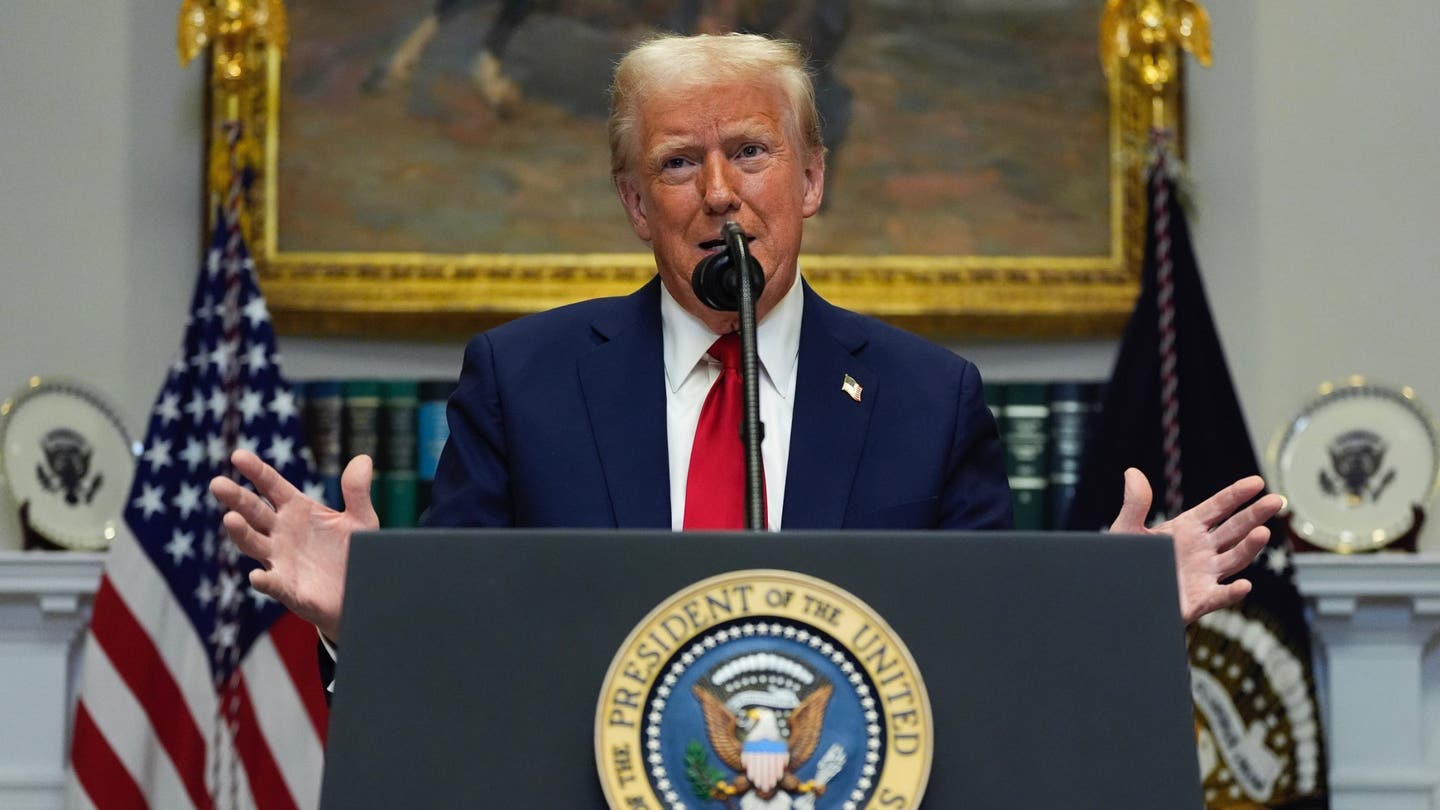
President Donald Trump’s latest moves show a White House still organized around speed, pressure, and loyalty. Whether the issue is a stalled surgeon general nomination, Iran policy, or congressional scrutiny of the administration’s war posture, the pattern is familiar. The president moves quickly, reframes the story, and forces allies and opponents to react on his terms.
The Associated Press reported that Trump pulled Casey Means’ stalled nomination for surgeon general and said he would put forward Nicole Saphier instead. On its own, that is a personnel story. In the context of Trump’s second term, it is also a window into how this White House manages friction. A stalled nomination is not allowed to linger indefinitely as a symbol of weakness. It is replaced, repackaged, and turned into forward motion.
That style has political value. It prevents Washington process stories from dragging on for weeks. It gives supporters a fresh nominee to defend. It signals that the president is willing to act when a choice no longer serves the administration’s goals. But it also creates questions about vetting, institutional stability, and whether major public-health roles are being filled through long-term planning or rapid political adjustment.
The surgeon general position is not merely ceremonial. It affects national health messaging, public trust, disease prevention, medical guidance, and the federal government’s ability to communicate during public-health uncertainty. When a nomination stalls and is replaced, the question is not only who gets the job. It is what the change says about the administration’s priorities and the kind of expertise it wants at the center of public-health communication.
Nicole Saphier, a radiologist and media figure, brings a different profile than Means. Trump’s decision to move toward a new nominee reflects the administration’s comfort with public-facing communicators who can operate in a polarized media environment. Supporters may see that as practical. Critics may worry that visibility and loyalty are being weighted too heavily in positions that require institutional credibility.
At the same time, the administration is dealing with Iran-related pressure on multiple fronts. AP live coverage described congressional scrutiny of Defense Secretary Pete Hegseth as lawmakers pressed the administration over the Iran war and related decisions. That kind of oversight matters because the conflict is no longer a contained foreign-policy issue. It is connected to oil prices, the Strait of Hormuz, military posture, inflation risk, and the administration’s broader national-security credibility.
Trump’s governing style often links domestic politics and foreign policy. Personnel choices, public statements, military options, congressional fights, and media narratives are treated as parts of the same political battlefield. The result is an administration that can move with unusual speed, but one that also produces uncertainty for allies, agencies, markets, and members of Congress trying to understand the next move.
Supporters argue that this is exactly why Trump remains effective. They see speed as strength, pressure as leverage, and loyalty as necessary discipline in a hostile Washington environment. In their view, the president is not bound by the slow habits of the federal bureaucracy. He can remove a weak nominee, pressure Iran, challenge allies, and force Congress to respond because he understands power as movement.
Critics see the same qualities differently. They argue that fast pivots can leave agencies unstable, allies uncertain, and policy less coherent. A public-health nomination change may be manageable on its own. But when paired with major foreign-policy tension and volatile markets, it contributes to a larger impression of government operating at high speed with limited margin for error.
The Iran issue magnifies that risk. Any administration dealing with a crisis near the Strait of Hormuz must balance pressure with restraint. Too little pressure can be interpreted as weakness. Too much pressure can worsen energy shocks, raise inflation expectations, and complicate relationships with allies. When military options are being discussed while oil markets are already strained, every signal from the White House matters.
Congressional scrutiny also changes the political dynamic. A president can dominate the news cycle, but Congress retains oversight powers and public hearings can expose contradictions or force administration officials to defend choices in detail. If lawmakers believe the Iran strategy lacks clarity, the administration will face questions not only from opponents but from markets and allies looking for predictable policy.
The White House therefore faces a dual challenge. It must maintain the image of control that Trump values while also demonstrating that major decisions are being made through a disciplined process. That is not easy. The qualities that energize Trump’s supporters can also unsettle institutions that depend on consistency.
For voters, the key question is whether speed produces accountability or volatility. A president who moves quickly can solve problems before they harden. A president who moves too quickly can create new problems before old ones are resolved. The difference is often visible only after the consequences arrive.
The surgeon general nomination will test the administration’s ability to place credible leadership in a sensitive health role. The Iran conflict will test its ability to manage military, diplomatic, and economic risk at the same time. Together, the stories show a presidency that is still intensely personal, still built around Trump’s instincts, and still willing to use pressure as a governing instrument.
That may be the defining feature of the moment. The Trump White House is not drifting. It is acting. The question is whether action at this speed can produce durable policy, or whether the same force that creates momentum also creates instability.
Additional reporting and source material from Associated Press coverage of President Trump’s surgeon general nomination change, Nicole Saphier, Casey Means, congressional scrutiny of the Iran war, and related White House developments.
Additional Reporting By: Associated Press
What this means
This matters because Trump’s personnel and foreign-policy decisions are moving together. The administration’s speed can project control, but it can also create uncertainty for agencies, Congress, allies, and markets watching for stable policy direction.