Hereditary Peers' Last Hurrah as 700-Year-Old System Abolished
The end of an era as hereditary peers bid farewell to the House of Lords
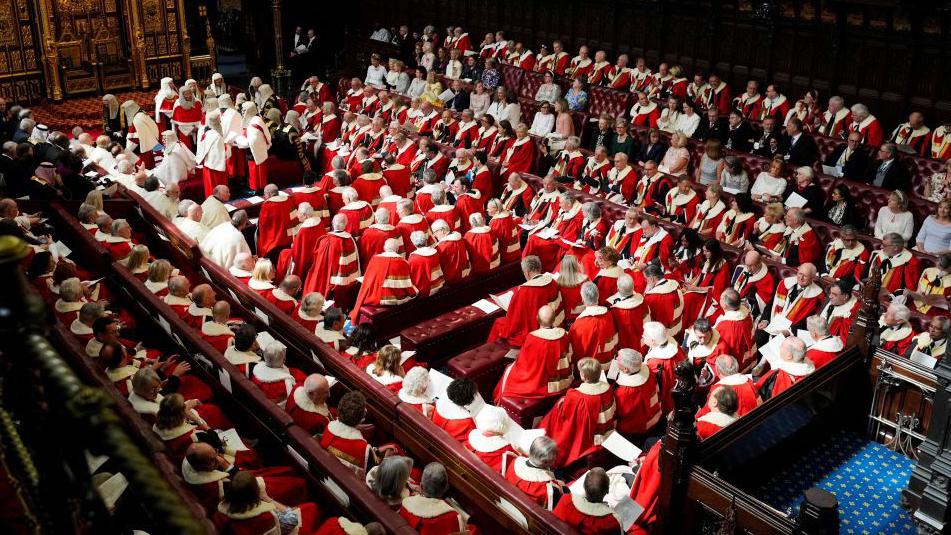
In a historic move, the UK Parliament has voted to abolish the hereditary peerage system, a practice that has been a cornerstone of British aristocracy for over 700 years. This decision has not only ended the automatic right of hereditary peers to sit in the House of Lords but has also ignited a nationwide debate about the role of the aristocracy in modern democracy.
The hereditary peerage system, which allowed individuals to inherit their titles and the privilege of sitting in the upper chamber of Parliament, has long been criticized for being an outdated remnant of feudalism. Critics argue that it undermines the principles of meritocracy and equality, while supporters maintain that it provides a link to the nation’s historical legacy.
The final vote on the abolition of hereditary peerages took place in the House of Commons, where lawmakers expressed a mix of nostalgia and relief. Many MPs acknowledged the contributions of hereditary peers to public life but recognized that the time had come for a change.
As the news broke, hereditary peers across the country prepared for their last hurrah in the House of Lords. Many attended farewell gatherings, reminiscing about their time in the chamber and the debates that shaped the nation. Some expressed sadness at the end of an era, while others welcomed the change as a necessary evolution.
The abolition of hereditary peerages is part of a broader trend towards reforming the House of Lords, which has faced increasing scrutiny over its composition and function. The House of Lords, unlike the House of Commons, is not elected, and its members are appointed or inherit their positions. This has led to calls for a more democratic and accountable system.
In recent years, various proposals have been put forward to reform the House of Lords, including suggestions to create a fully elected chamber or to introduce a system of appointed members based on expertise. The abolition of hereditary peerages may pave the way for further reforms, as lawmakers look to create a legislative body that reflects contemporary British society.
However, not everyone is in favor of the change. Some hereditary peers have voiced their concerns, arguing that their unique perspectives and experiences have brought valuable insights to the legislative process. They fear that the loss of hereditary peers will diminish the quality of debate and the depth of knowledge in the House of Lords.
The debate surrounding the abolition of hereditary peerages has also highlighted the broader question of the role of the aristocracy in contemporary British society. As the UK grapples with issues of social mobility and inequality, the relevance of hereditary titles and privileges is increasingly being called into question.
In recent years, there has been a growing movement to challenge the notion of inherited privilege, with many advocating for a more egalitarian society. The abolition of hereditary peerages can be seen as a reflection of this shift in societal values, as the UK seeks to redefine what it means to be a member of the aristocracy in the 21st century.
As the last hereditary peers prepare to leave the House of Lords, the future of the British aristocracy remains uncertain. While some may mourn the loss of a traditional institution, others view it as an opportunity for progress and reform. The abolition of hereditary peerages marks a pivotal moment in the evolution of the UK’s political landscape, and its implications will be felt for generations to come.
In the wake of this historic decision, discussions about the future of the House of Lords are likely to intensify. Lawmakers and citizens alike will be watching closely to see how the upper chamber adapts to its new reality and whether further reforms will be implemented to ensure that it meets the needs of a modern democracy.
As the UK moves forward without hereditary peers, the question remains: what does this mean for the future of governance and representation in the country? The abolition of a 700-year-old system is not just a change in title; it is a reflection of a society in transition, grappling with its past while striving for a more inclusive future.
Additional Reporting By: UK legislation; UK Parliament; BBC News
What this means
The abolition of hereditary peerages signifies a monumental shift in the UK’s political landscape, reflecting a growing demand for democratic representation and equality. This change may lead to further reforms in the House of Lords, potentially resulting in a more diverse and accountable legislative body that aligns with contemporary societal values.